
Choosing the right free zone is one of the biggest decisions when setting up a business in the UAE. Two names that frequently appear on every entrepreneur’s shortlist are DMCC (Dubai Multi Commodities Centre) and IFZA (International Free Zone Authority). While both offer attractive benefits such as 100% foreign ownership and a business-friendly environment, they are designed for different types of companies.
If you’re comparing DMCC vs IFZA, this guide explains the key differences in costs, licensing, office requirements, visa options, and business suitability so you can confidently choose the right free zone for your goals.
Why Are DMCC and IFZA Compared So Often?
Although both are Dubai-based free zones, they appeal to different business owners.
DMCC has built a strong reputation as one of Dubai’s premium business districts, attracting established companies, international traders, and global brands.
IFZA, on the other hand, is known for offering flexible and affordable company formation packages, making it a popular choice for startups, consultants, freelancers, and SMEs.
Your decision should depend on more than just setup costs. Consider factors like:
- Initial investment
- Business activity
- Office requirements
- Visa needs
- Long-term expansion plans
- Corporate image
- Banking requirements
Understanding the Difference
Before comparing features, it’s important to understand what each free zone is best known for.
DMCC
Located in the Jumeirah Lakes Towers (JLT) district, DMCC is internationally recognized for supporting trading companies, commodities businesses, multinational firms, financial services, and professional enterprises. Its premium location and business ecosystem make it attractive for companies looking to establish a strong market presence.
IFZA
IFZA operates with a strong focus on flexibility and affordability. It supports a wide range of commercial and professional activities and has become one of the fastest-growing choices for entrepreneurs launching new businesses in Dubai.
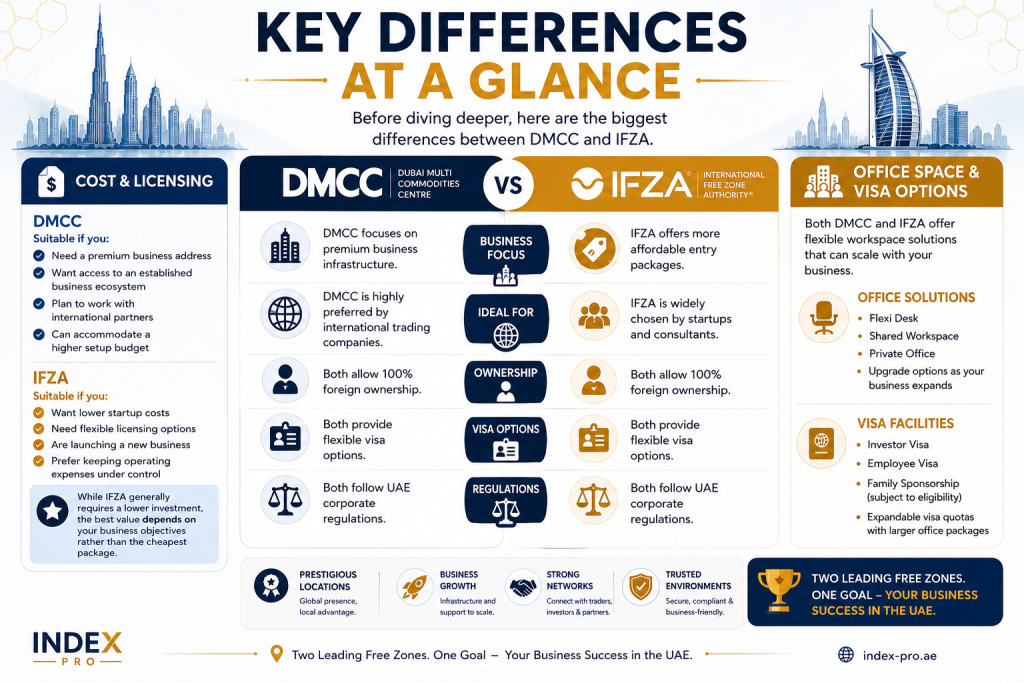
Tip: If you anticipate rapid business growth or plan to hire employees, compare the available office packages and visa allocations before making your final decision. This can help you avoid additional costs and simplify future expansion.
Which Businesses Benefit the Most?
| Feature | DMCC | IFZA |
|---|---|---|
| Pros | ✔ Globally recognized free zone ✔ Prestigious business location ✔ World-class infrastructure ✔ Ideal for established and large businesses ✔ Strong corporate credibility | ✔ Cost-effective company formation ✔ Flexible licensing and business activities ✔ Quick and streamlined incorporation ✔ Perfect for startups and SMEs ✔ Lower investment required |
| Cons | ✖ Higher setup and operational costs ✖ May not suit budget-conscious startups | ✖ Less prestigious business positioning than DMCC ✖ Growing businesses may later need to upgrade to a premium free zone |
Making the Right Choice
If prestige, international networking, and premium infrastructure are your priorities, DMCC is often the stronger choice.
If flexibility, affordability, and a quicker path to starting your business matter more, IFZA is likely the better fit.
Instead of asking which free zone is “better,” ask which one supports your business model, growth plans, and available budget.
Need Help Choosing Between DMCC and IFZA?
Selecting the right free zone isn’t just about comparing prices – it’s about choosing a business structure that supports your long-term goals. IndexPro helps entrepreneurs evaluate UAE free zones, compare licensing options, understand compliance requirements, and complete the entire company formation process with expert guidance. Whether you’re launching a startup, expanding an existing business, or entering the UAE market for the first time, our team is here to make the process simple, transparent, and hassle-free.
Frequently Asked Questions
Is DMCC better than IFZA?
Not necessarily. DMCC is generally preferred by larger businesses and international trading companies, while IFZA is popular with startups and SMEs.
Which free zone is more affordable?
In most cases, IFZA offers lower-cost business setup packages than DMCC.
Can foreigners own 100% of their company?
Yes. Both DMCC and IFZA allow 100% foreign ownership.
Which is better for consultants?
Many consultants choose IFZA because of its flexible licensing and competitive pricing.
Is DMCC suitable for startups?
Yes, but startups with tighter budgets often find IFZA to be a more cost-effective option.
Can I expand my business later?
Yes. Both free zones allow companies to upgrade office space, add business activities, and increase visa eligibility as they grow.